Approaching Composable, Headless, and Standalone Commerce Architectures

In this post, we'll continue our progress toward crafting peak customer experiences. One tool that will be invaluable to us is an architectural approach called composable commerce.
Like many modern architectures, composable commerce departs from traditionally monolithic, standalone architectures.
Standalone architectures keep everything within one system. They usually support plug-in modules or APIs for enhancement and customization. Often, entire ecosystems emerge, with component vendors meeting specific needs.
With traditional e-commerce platforms, the core e-commerce transaction footprint and its dependencies live under one roof. This includes everything from products and inventory to carts, orders, and payments.
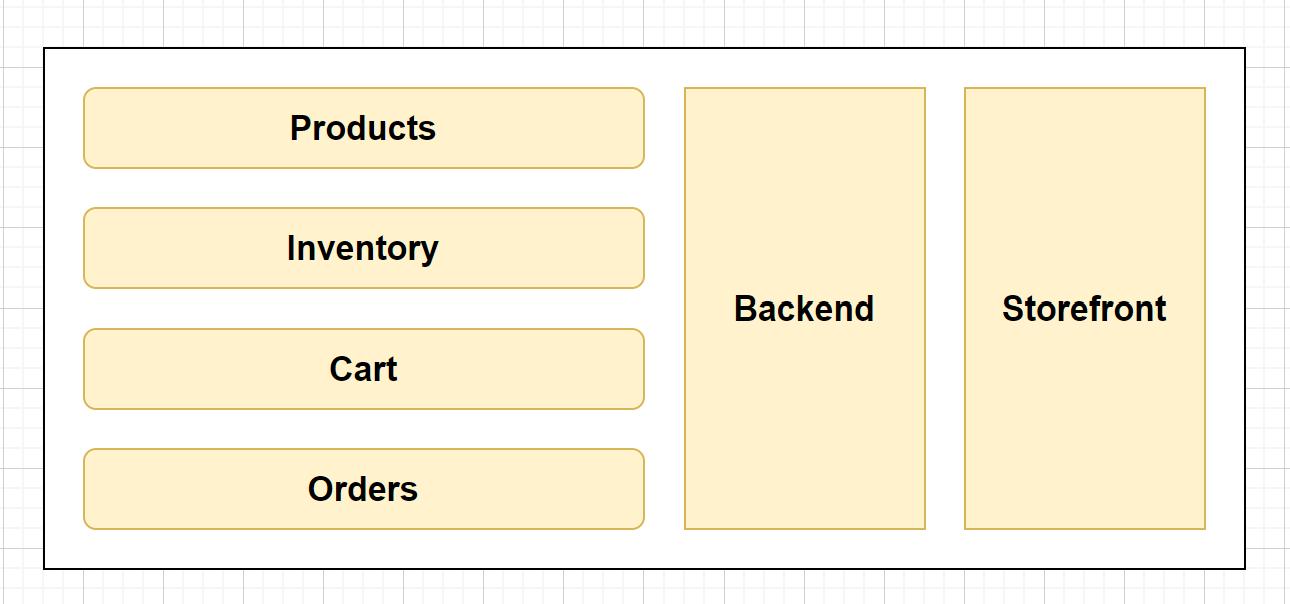
Most SaaS companies offer standalone platforms that you can extend via APIs and plugins. While SaaS platforms simplify infrastructure, they tend to be opinionated about everything – architecture, schemas, processes.
If we disagree with our SaaS provider's approach, our main recourse is to switch platforms – although once we're invested in their ecosystem, migrating elsewhere can be costly.
This is why companies choose custom platforms. Complete code ownership lets us match business needs exactly. That said, if adaptation and innovation are priorities, we need to avoid a monolithic architecture.
Single-codebase development is slower and riskier. With larger codebases, coupling is inevitable. Changing one thing can easily break 20 others. Worst of all, monolith deployments are all-or-nothing – one bad release can take down the entire platform.
Composable commerce architecture addresses many of these problems. However, before discussing it, we need to briefly examine "headless architecture," which underpins it.
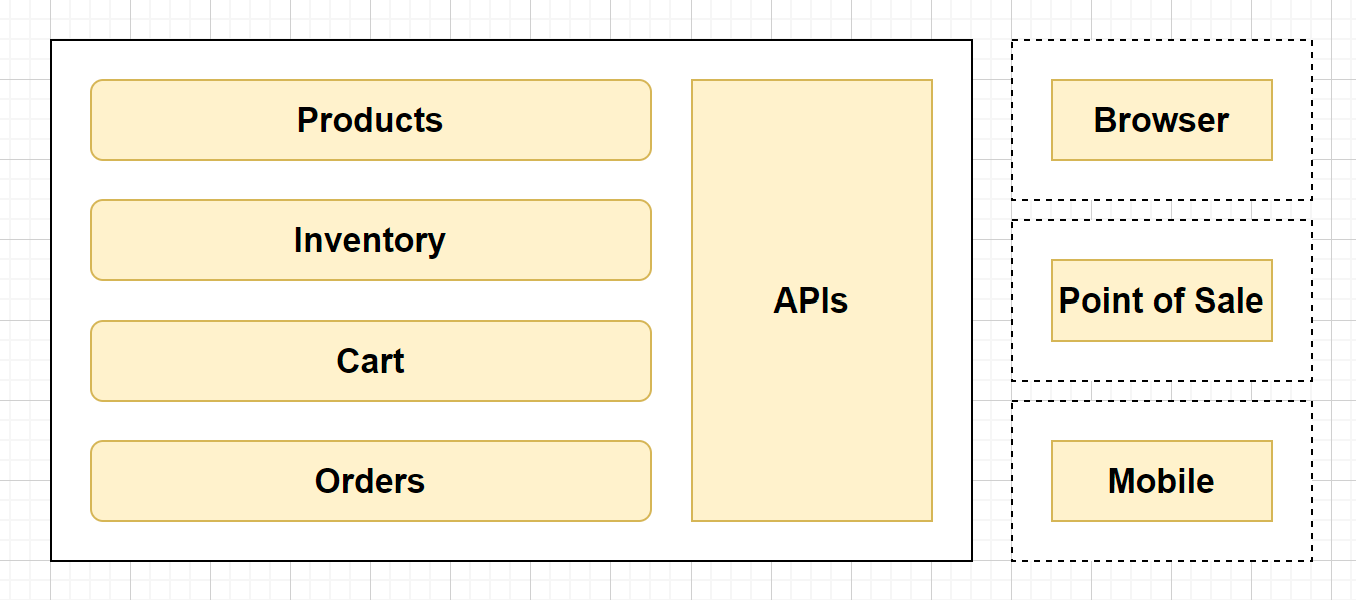
Headless embraces an API-first architecture that cleanly separates frontends from backends. Backends expose functionality through APIs that frontends consume, decoupling them. Digital commerce frontends can take many forms: browser-based storefronts, mobile apps, and point-of-sale apps.
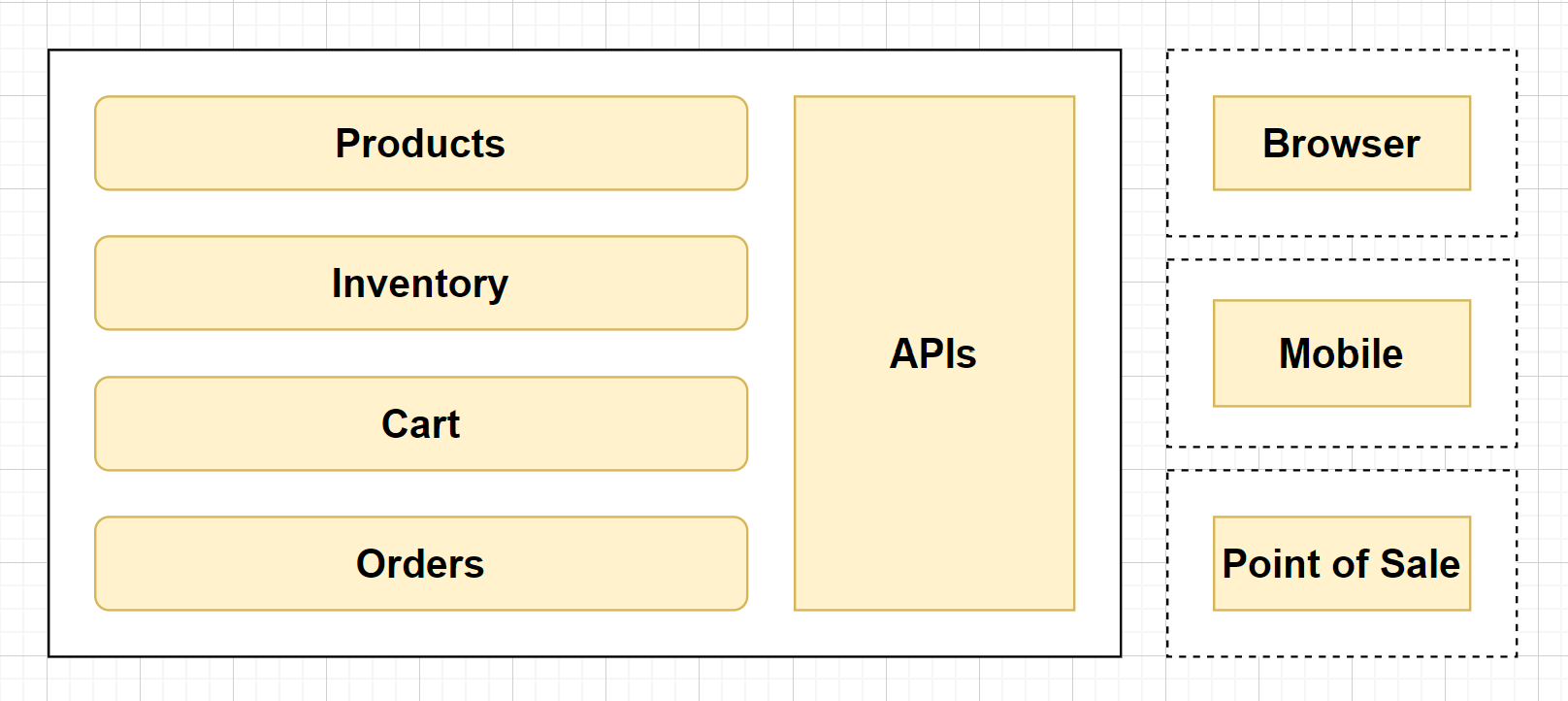
APIs are designed to be abstract enough that any frontend can use them, whether it's a browser, mobile, or desktop. This accelerates development, especially when adding new channel storefronts.
For browser storefronts, it's common to accelerate delivery with cloud-native resources like Azure Static Web Apps or Azure Front Door. Meanwhile, mobile apps benefit automatically from built-in app store scalability.
In a nutshell, headless means faster development, easier innovation, and better scalability across new channels. With that in mind, let's now look at composable commerce.
Composable commerce takes the headless approach a step further by treating each backend system as a separate entity with its own data store and API.
Instead of our product catalog being part of a monolith, it's now a distinct system. The same goes for inventory, orders, finance, payment processing, and so on. This is textbook microservices in the real world.
Now, imagine we're hosting a production commerce system, complete with product catalog and merchandising data.
In practice, we find that we can't share the same product images and descriptions across mobile and desktop. We'd like to reuse them, but layout and image-sizing issues create an awkward cross-platform experience.
Thus, we need to host multiple copies of our store. However, running this setup is a nightmare. We now need to synchronize inventory, customers, and orders across all store copies. This is where composable comes in.
With composable, we can build or buy a dedicated product information management system. Our goal is to centrally store merchandising data across multiple channels.
Depending on the sales channel, our system delivers the appropriate images and text from our product data. Our staff manages our product data within a dedicated, centralized silo.
With composable, we apply the same approach everywhere: inventory, orders, purchasing, payment processing, and fulfillment. We choose the best-fit systems to meet each silo's needs.
The result is a unified commerce platform that matches our needs precisely. Moreover, our operational footprint is now more flexible. With specialized systems, it's easier to delegate specialized roles.
Caveat: this doesn't come without complexity or a substantial engineering investment.
We minimally need an adapter layer that simplifies API interactions across microservices – often referred to as backend-for-frontend. And we need a dedicated orchestration system to ensure cross-system consistency.
Nevertheless, this approach puts us on the path to unified digital commerce – more flexibility, more efficient internal operations, and better speed to market.